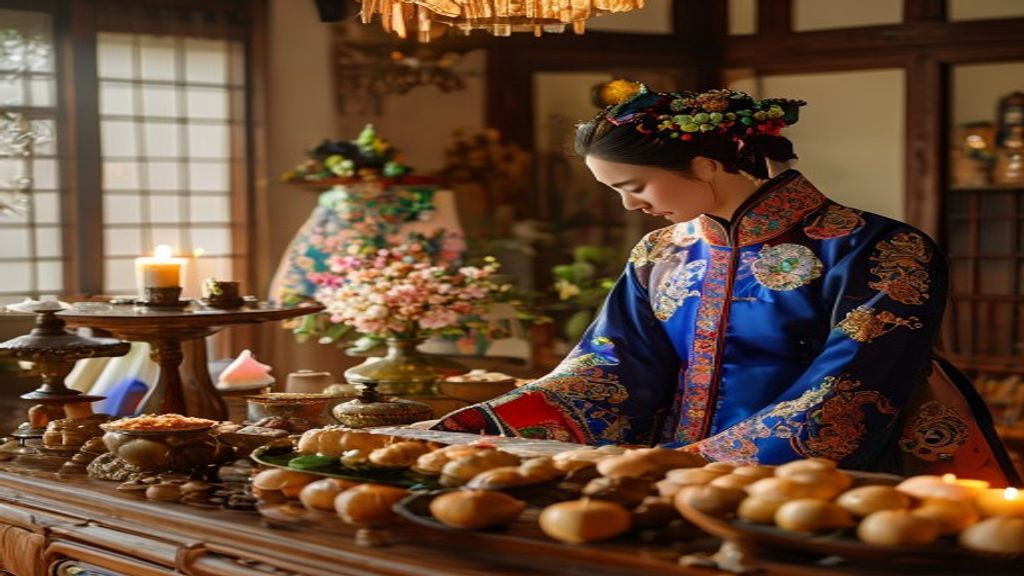
What Makes a Korean Wedding Unique?
If you've ever attended a Korean wedding — or watched one unfold in a K-drama — you've probably noticed it feels unlike any Western ceremony you've seen. There's an almost cinematic quality to it: silk robes in jewel-bright colors, formal bows that carry centuries of meaning, and a table piled high with symbolic foods. But there's also a very modern twist waiting just around the corner.
Korean weddings exist in a fascinating in-between space. They honor one of the world's most meticulous Confucian-influenced cultures while simultaneously embracing contemporary trends from wedding halls to Instagram-worthy décor. Understanding both layers is the key to truly appreciating what's happening when two Korean families come together.
Whether you're attending a Korean wedding as a guest, planning your own, or simply curious about one of Asia's richest cultural traditions, this guide breaks down everything you need to know.
---
A Brief History: Where These Traditions Come From
Korean wedding customs trace their roots back to the Joseon Dynasty (1392–1910), a 500-year reign deeply shaped by Neo-Confucian philosophy. Marriage wasn't just a union between two people — it was an alliance between two families, two lineages, and two sets of social responsibilities.
The traditional Korean wedding ceremony is called Jeongtong Honrye (정통혼례), and it follows a protocol that was codified during the Joseon era. Weddings were often arranged, with matchmakers (중매쟁이, jungmaengi) playing a central role in identifying suitable partners based on family background, social status, and even astrology.
After Japanese colonization and the rapid Westernization of the 20th century, many traditional elements were set aside. Today, most Koreans opt for a hybrid format: a Western-style ceremony in a commercial wedding hall, followed by the traditional Paebaek (폐백) rite performed privately with family.
---
Before the Wedding: Engagements and Pre-Wedding Customs
The Role of Matchmaking
While arranged marriages are rare today, the spirit of family involvement remains strong. Many Korean couples still involve their parents heavily in the decision to marry, and formal introductions between families — called 맞선 (matseon) — are a standard step before engagement.
Think of matseon as a structured first date, often organized by parents or a professional matchmaker, where the two families assess compatibility. It's not just romantic — it's practical and deeply rooted in the idea that marriage is a family affair.
Saju and Taekil: Consulting the Stars
Before the wedding date is set, many traditional families exchange Saju (사주) — the groom's birth date, time, and year written in Chinese characters. A fortune teller or elder then analyzes the couple's compatibility and suggests auspicious dates for the wedding. This practice, rooted in the ancient Four Pillars system, is still observed in many Korean households today, even among younger generations who treat it as a meaningful cultural nod rather than a strict requirement.
Ham: The Engagement Gift Box
One of the most festive pre-wedding customs is the Ham (함) delivery. The groom's friends carry a wooden chest filled with gifts to the bride's home — traditionally fabrics, jewelry, and a letter of marriage proposal. The delivery is playful and rowdy: the friends arrive chanting and often demand money or food before handing over the box. It's noisy, fun, and a vivid reminder that Korean weddings are as much about community as they are about the couple.
---
The Traditional Ceremony: Jeongtong Honrye
The Wedding Attire: Hanbok in Full Glory
The most visually stunning element of a Korean traditional wedding is undoubtedly the Hanbok (한복). Unlike everyday hanbok, wedding hanbok is extraordinarily elaborate.
- The bride wears a wonsam or hwarot — a layered ceremonial robe in vivid greens, reds, and golds, embroidered with phoenixes and flowers symbolizing virtue and good fortune. Her hair is styled in a formal updo called jjok and decorated with a Jokduri (족두리), a small jeweled crown.
- The groom wears a formal gwanbok — a blue or black robe with a tall black hat (gat) and a red sash across the chest.
The Ceremony Steps
The Jeongtong Honrye follows a precise sequence:
1. Youngshin Rye (영신례) — Welcoming the groom to the ceremonial space 2. Jeon Ahn Rye (전안례) — The groom presents a wooden goose (or duck) to the bride's mother as a symbol of lifelong fidelity, since geese mate for life 3. Gyobaerye (교배례) — The couple faces each other and perform deep bows (keunjeol) to one another, symbolizing mutual respect 4. Hapgeunrye (합근례) — The couple drinks from cups of rice wine, then exchange cups, symbolizing the sharing of life's joys and sorrows 5. Seongnye (성례) — The formal completion of the ceremony
Every bow, every sip, every step is choreographed and carries meaning accumulated over centuries.
---
Paebaek: The Private Family Ceremony
If Jeongtong Honrye is the public ceremony, Paebaek (폐백) is the intimate heart of a Korean wedding.
After the main ceremony, the bride and groom change into formal hanbok and perform deep bowing ceremonies (keunjeol) to the groom's parents and elder relatives. The parents sit behind a low ceremonial table (paebaek table) laden with symbolic foods:
- Jujubes (대추) — representing future sons
- Chestnuts (밤) — representing future daughters
- Dried persimmons — symbolizing prosperity
- Rice wine — for blessings and health
Paebaek is typically private, attended only by close family, and it's often the most emotionally resonant part of the entire wedding day.
---
Modern Korean Weddings: The Wedding Hall Culture
How Weddings Work Today
The vast majority of Korean weddings today take place in Wedding Halls (웨딩홀) — purpose-built venues that handle ceremonies on an almost industrial scale. In major cities like Seoul, a single wedding hall might host four or five ceremonies on a Saturday, each in a different room, running like clockwork.
The format typically looks like this:
- A Western-style ceremony with the couple in white dress and suit
- A formal photo session
- A buffet-style reception for guests
- A private Paebaek room for family rituals
Wedding Gifts: The Envelope Culture
Guests at Korean weddings don't typically bring wrapped gifts. Instead, they bring white envelopes filled with cash, which are registered at a gift table near the entrance. The amounts are recorded by name — because reciprocity is important in Korean culture. When the guest later gets married, the couple is expected to give a similar or larger amount.
The going rate for a cash gift varies by your relationship to the couple:
- Close friends: ₩100,000–300,000 (~$75–$225)
- Coworkers or acquaintances: ₩50,000–100,000 (~$38–$75)
- Family: Much higher, often in the ₩500,000+ range
Food and Feasting: What You'll Eat at a Korean Wedding
Food at Korean weddings is abundant and deeply symbolic. Traditional wedding feasts (honrye eumsik) included:
- Guksu (국수) — Long noodles symbolizing a long and happy marriage. Guests are often served noodle soup, and asking someone "When are you eating noodles?" is a common Korean way of asking when they're getting married.
- Tteok (떡) — Rice cakes in various forms, representing prosperity and good wishes
- Yakgwa — Honey cookies given as gifts to guests
- Jeon — Savory pancakes, a staple of any major Korean celebration
---
Regional and Religious Variations
Korea's wedding traditions aren't monolithic. There are notable regional differences — for example, Jeju Island's wedding customs historically differed from those on the mainland due to its matrilineal social structures.
Religion also plays a role. Roughly 30% of South Koreans identify as Christian, and Christian weddings in Korea often look much more Western, held in churches with hymns and sermons rather than ritual bows. Buddhist weddings exist too, with ceremonies held in temples and a focus on mindfulness and compassion as the foundation of marriage.
In rural areas and among older generations, traditional elements tend to be more strictly observed. In cities, especially among younger Koreans, the trend is increasingly toward personalized ceremonies that pick and choose meaningful elements from both Eastern and Western traditions.
---
What to Expect as a Wedding Guest
If you're lucky enough to be invited to a Korean wedding, here are a few things to keep in mind:
- Dress formally but conservatively — Avoid white (the bride's color in Western tradition but associated with mourning in Korean culture) and overly casual attire
- Bring cash in a white envelope — Confirm the expected amount with a mutual Korean friend if unsure
- Arrive on time — Korean wedding ceremonies are often brisk, sometimes lasting only 20–30 minutes
- Don't expect a seated dinner — Most modern weddings feature a buffet before or after the ceremony, not a formal sit-down meal
- You may not see the Paebaek — It's usually family-only, so don't feel left out
- Understand the pace — The ceremony may feel fast compared to Western weddings; that's entirely normal
The Deeper Meaning: Why These Traditions Still Matter
In an era of global homogenization, it would be easy to dismiss the traditional elements of Korean weddings as nostalgic formality. But that misses the point entirely.
For many Korean families, the Paebaek bows aren't just ritual — they're a moment of genuine emotional connection between generations. The exchange of the wooden goose isn't superstition — it's a public declaration of fidelity rooted in a culture that takes commitment seriously. The cash envelope system isn't transactional — it's a living network of reciprocal care that functions as a community safety net.
Korean wedding traditions, whether observed strictly or woven lightly into a modern ceremony, carry a philosophy: that marriage is not a private event but a community one, that family bonds are sacred, and that the past and present can coexist with dignity.
That's something worth understanding — and celebrating.
---
Final Thoughts
From the fortune teller consulted before a date is set to the jujubes caught in a silk skirt, Korean wedding traditions are layered, meaningful, and endlessly fascinating. Whether you're diving in as a curious observer or preparing to participate, knowing the story behind each custom transforms what might look like ceremony into something deeply human.
If this introduction to Korean wedding culture has sparked your curiosity, there's much more to explore — from Korean family structures and Confucian values to the broader world of Korean seasonal celebrations and ancestral rites. Korean culture rewards the deeper look, and weddings are one of the best windows into it.
Explore more Korean cultural guides to deepen your understanding of hanbok, jesa ancestral ceremonies, Korean table etiquette, and the philosophy behind Korea's most important celebrations.