What Makes an Authentic Korean Kimchi Recipe
Walk into any Korean home, and you'll likely hear the refrigerator hum—not the regular kitchen fridge, but the dedicated kimchi refrigerator. This specialized appliance, found in over 70% of Korean households, maintains precise temperatures for fermenting and storing kimchi, Korea's most iconic dish. This devotion to kimchi isn't just about food preservation; it's about maintaining a culinary tradition that dates back thousands of years.
Authentic kimchi (김치) is more than fermented cabbage. It's a living food that changes daily, a source of national pride, and a UNESCO-recognized cultural heritage. Making kimchi at home connects you to centuries of Korean tradition while filling your kitchen with probiotics and bold, complex flavors that store-bought versions simply cannot match.
This comprehensive guide will teach you how to make traditional baechu kimchi (napa cabbage kimchi) using authentic methods passed down through Korean families, with practical adaptations for Western kitchens.
The Cultural Significance of Kimchi in Korean Life
Kimjang: A Community Tradition
Every November, Korean families participate in kimjang—the annual kimchi-making tradition where entire communities gather to prepare massive quantities of kimchi for winter. In 2013, UNESCO recognized kimjang as an Intangible Cultural Heritage of Humanity, acknowledging its role in strengthening family bonds and community cooperation.
Traditionally, families would prepare hundreds of heads of cabbage, enough to last through the harsh winter months when fresh vegetables were scarce. Today, even in modern Seoul apartments, families continue this practice, though on a smaller scale.
More Than Just a Side Dish
Kimchi appears at virtually every Korean meal, from breakfast to dinner. Koreans consume an average of 1.85 million tons of kimchi annually—roughly 40 kilograms per person. It's not just a banchan (side dish); it's an ingredient in countless recipes: kimchi jjigae (stew), kimchi fried rice, kimchi pancakes, and even kimchi pizza.
Essential Ingredients for Authentic Homemade Kimchi
The Core Components
Authentic kimchi requires specific ingredients that create its characteristic flavor profile. While shortcuts exist, using traditional ingredients makes a significant difference:
Napa Cabbage (Baechu)
- Choose heavy, compact heads with pale yellow-green leaves
- Look for cabbages weighing 2-3 pounds each
- The leaves should be crisp, not wilted
- Avoid cabbages with brown spots or excessive outer damage
- This is non-negotiable for authentic flavor
- Coarsely ground, sun-dried Korean red peppers
- Creates kimchi's signature color and mild heat
- Regular red pepper flakes or cayenne are NOT substitutes
- Available at Korean markets or online
- Used for salting the cabbage
- Larger crystals than table salt
- Kosher salt works as an alternative
- Avoid iodized salt, which can affect fermentation
- Creates body and helps the seasoning stick
- Feeds beneficial bacteria during fermentation
- Made by cooking sweet rice flour with water
- Some recipes use regular rice flour or even potato
The Flavor Builders
Fermented Seafood (Jeotgal)
- Salted fermented shrimp (saeujeot) or anchovy sauce (myeolchi aekjeot)
- Provides the deep umami backbone
- Vegetarian kimchi omits this but loses traditional depth
- Fish sauce can substitute in a pinch, though flavor differs
- Korean radish (mu): adds crunch and slight sweetness
- Garlic: use fresh, not powdered (1 head minimum)
- Ginger: fresh root, about 2 inches
- Green onions: both white and green parts
- Yellow onion: adds natural sweetness
- Asian pear or apple: natural sweetness and enzymes
- Carrot: color and slight sweetness
- Water dropwort (minari): herbaceous note
- Korean chives (buchu): aromatic depth
Step-by-Step Traditional Kimchi Recipe
Ingredients (Makes about 4-5 pounds)
For the Cabbage:
- 2 medium napa cabbages (about 4-5 pounds total)
- 1 cup coarse Korean sea salt
- Water for brining
- 2 tablespoons sweet rice flour (glutinous rice flour)
- 1 cup water
- 1 tablespoon sugar
- 1 cup gochugaru (Korean red pepper flakes)
- 1 Korean radish (about 1 pound), julienned
- 1 head garlic (about 10-12 cloves), minced
- 2-inch piece fresh ginger, minced
- 1 medium onion, roughly chopped
- 3-4 tablespoons fish sauce or salted shrimp
- 1 Asian pear or apple, grated
- 6-8 green onions, cut into 2-inch pieces
- 2 tablespoons sugar (optional, for faster fermentation)
Phase 1: Salting the Cabbage (6-8 Hours)
This crucial step draws out water, softens the leaves, and creates the right environment for fermentation.
1. Prepare the cabbage: Cut each cabbage lengthwise into quarters. Remove the core, but leave enough stem to hold leaves together.
2. Apply salt between layers: Lift each leaf and sprinkle salt between layers, using more salt on the thicker white parts. Use about ¾ of your salt.
3. Create the brine: Dissolve remaining salt in water (about 4-6 cups). Pour over the cabbage in a large bowl or basin.
4. Weight and wait: Place a plate on top with something heavy to keep cabbage submerged. Let sit for 6-8 hours, turning every 2-3 hours for even salting.
5. Check readiness: The cabbage should bend easily without breaking, and the thick white parts should be flexible, not crunchy.
6. Rinse thoroughly: Rinse the cabbage 2-3 times in cold water to remove excess salt. Drain in a colander for 30-60 minutes, cut-side down.
Phase 2: Making the Kimchi Paste
1. Prepare the porridge: Mix sweet rice flour with cold water. Heat while stirring constantly until it thickens and becomes translucent (about 3-5 minutes). Add sugar, stir, and let cool completely.
2. Blend the base: In a blender, combine onion, garlic, ginger, pear, and fish sauce. Blend until smooth. This creates a flavor concentrate that distributes evenly.
3. Mix the paste: In a large mixing bowl, combine the cooled porridge, blended mixture, and gochugaru. Mix well—it should look like a thick, red paste. Adjust gochugaru for desired spiciness.
4. Add vegetables: Mix in julienned radish and green onions. The radish will add crunch and absorb flavors beautifully.
Phase 3: Assembling the Kimchi
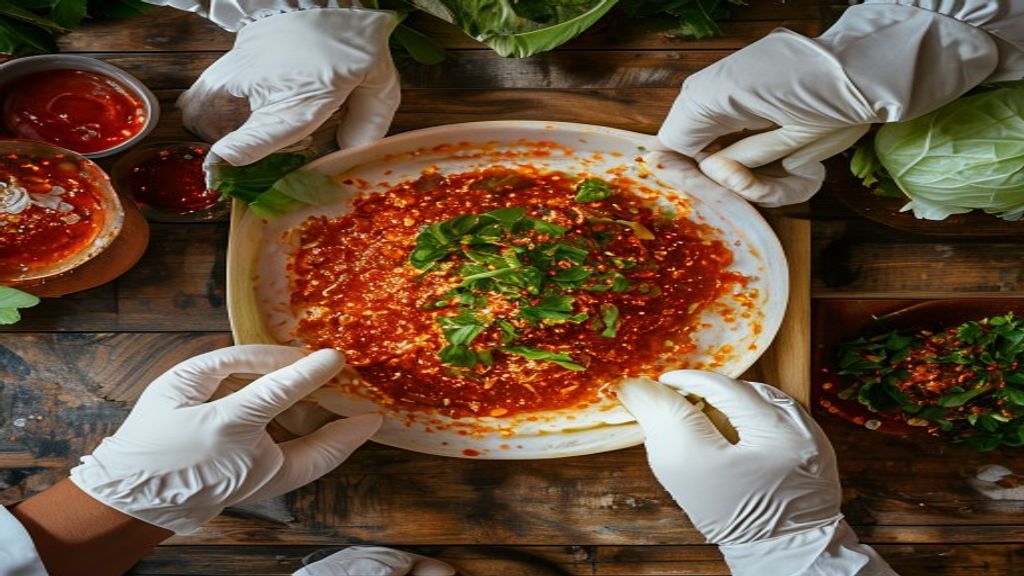
Wear gloves for this step—gochugaru can irritate skin and the smell lingers.
1. Coat each leaf: Take one cabbage quarter and spread paste between each leaf, from the bottom to the top. Be generous but not excessive.
2. Pack tightly: Once coated, fold the cabbage in half and place it in your fermentation container, cut-side up. Pack additional radish mixture around and on top.
3. Minimize air exposure: Press down firmly to remove air pockets. Leave about 2 inches of headspace for expansion during fermentation.
4. Optional sealing: Some cooks place outer cabbage leaves on top or add any remaining radish mixture to seal the surface.
The Fermentation Process: Timing and Technique
Initial Fermentation (1-5 Days)
Proper fermentation is where kimchi develops its signature tangy flavor and beneficial probiotics.
Room Temperature Phase:
- Leave kimchi at room temperature (65-70°F / 18-21°C)
- Duration depends on temperature and preference:
- You'll notice bubbles forming and liquid accumulating
- Taste daily—when it's slightly tangy, move to the refrigerator
- Warmer temperatures = faster fermentation = tangier kimchi
- Cooler temperatures = slower fermentation = milder flavor
- Ideal range: 60-70°F (15-21°C) for controlled fermentation
Long-Term Storage and Aging
Once refrigerated, kimchi continues fermenting slowly:
- Week 1-2: Fresh, crunchy, mildly tangy—excellent for eating fresh
- Week 3-4: Developing complexity, increased tang, still crunchy
- Month 2-3: Well-fermented, deeply flavorful, softer texture
- Month 4+: Very sour, best for cooking (kimchi jjigae, fried rice)
Traditional vs. Modern Variations
Regional Differences in Korea
Kimchi recipes vary dramatically across Korea's regions:
Northern Style (Pyeongan, Hamgyeong provinces):
- Less salt and red pepper
- More seafood and fish
- Quick fermentation
- Often watery consistency
- More gochugaru (spicier)
- Abundant seafood (shrimp, oysters, anchovies)
- Richer, more complex flavors
- Generous use of salted seafood
- Balanced salt and spice
- Moderate seafood use
- Standard recipe most commonly seen
- Focus on clean, crisp flavor
Modern Adaptations
Contemporary cooks have created variations for different dietary needs:
Vegan Kimchi (Vegetarian):
- Replace fish sauce with soy sauce or miso paste
- Add dried mushroom powder for umami
- Use kelp powder or seaweed
- Results in cleaner but less complex flavor
- No gochugaru—pale colored
- Milder, suitable for children
- Emphasizes radish, pear, pine nuts
- Refreshing, slightly sweet
- Fresh kimchi, consumed immediately
- No fermentation period
- Lighter, crunchier texture
- Perfect for beginners
Troubleshooting Common Kimchi-Making Problems
Too Salty
Cause: Over-salting during brining or insufficient rinsing Solution: Rinse cabbage more thoroughly, or soak finished kimchi briefly in cold water (though this reduces fermentation)Too Bland
Cause: Not enough gochugaru, fish sauce, or aromatics Solution: Add more seasoning paste, but be aware it won't distribute as evenly after assemblyNot Fermenting
Cause: Too cold, too much salt, or old ingredients Solution: Move to warmer location (70-75°F), ensure proper salt balance, use fresh ingredientsMushy Texture
Cause: Over-fermented, too warm, or cabbage not drained properly Solution: Ferment at cooler temperatures, ensure cabbage drains 30+ minutes, refrigerate soonerMold Growth
Cause: Exposure to air, contaminated utensils, too warm Solution: Keep kimchi submerged in liquid, use clean utensils, check container sealToo Sour Too Fast
Cause: Too warm during fermentation Solution: Refrigerate earlier, ferment in cooler spot, reduce initial fermentation timeHealth Benefits and Nutritional Value
Kimchi's reputation as a superfood is well-earned:
Probiotic Powerhouse:
- Contains Lactobacillus bacteria (similar to yogurt)
- Supports digestive health and gut microbiome
- One serving contains billions of beneficial bacteria
- Most effective when consumed fresh or lightly fermented
- High in vitamins A, B, C
- Rich in fiber (aids digestion)
- Contains antioxidants from garlic, ginger, peppers
- Low calorie (about 15-30 calories per serving)
- May support immune function
- Potential anti-inflammatory properties
- Some studies suggest benefits for weight management
- Contains compounds that may support heart health
- High in sodium (moderate intake if salt-sensitive)
- Spiciness may irritate sensitive stomachs
- Fermented foods may not suit everyone initially
Storage Tips and Best Practices
Proper Container Selection
Best Options:
- Glass jars with tight lids (mason jars work well)
- Plastic containers specifically for kimchi (BPA-free)
- Traditional onggi (Korean earthenware) for optimal fermentation
- Stainless steel containers with rubber seals
- Regular plastic (absorbs odor permanently)
- Metal containers without protective coating
- Containers without tight seals
Preventing Kimchi Smell
Kimchi's pungent aroma is beloved by some, overwhelming to others:
- Store in dedicated containers with tight seals
- Double-bag in resealable bags if needed
- Place open box of baking soda near kimchi in fridge
- Use glass containers, which absorb less odor
- Consider a small dedicated kimchi refrigerator if space allows
Serving and Handling
- Always use clean utensils to prevent contamination
- Press kimchi down after each use to keep submerged
- Let kimchi come to room temperature before serving for best flavor
- Liquid (kimchi juice) is precious—use in cooking, dressings, or drinks
Beyond the Jar: Using Your Homemade Kimchi
Once you've mastered making kimchi, explore its versatility:
Classic Korean Dishes:
- Kimchi jjigae (kimchi stew): use older, sour kimchi
- Kimchi bokkeumbap (fried rice): weeknight staple
- Kimchi jeon (pancake): crispy, savory snack
- Dubu kimchi (tofu and kimchi): simple, satisfying
- Kimchi grilled cheese sandwiches
- Kimchi pasta or carbonara
- Kimchi tacos and quesadillas
- Kimchi pizza topping
- Kimchi bloody mary cocktails
- Chop kimchi before adding to dishes
- Save kimchi juice for marinades and dressings
- Sauté kimchi to mellow tartness and develop depth
- Pair with rich foods to cut through fat
Embracing the Kimchi-Making Journey
Making authentic kimchi at home is a rewarding process that connects you to Korean culinary heritage. Your first batch may not be perfect—and that's okay. Korean home cooks often say that every family's kimchi tastes different, and even the same recipe produces slightly different results based on temperature, timing, and the cook's hand.
The beauty of kimchi-making lies in this variability. Some batches will be tangier, others spicier, some crunchier. Each jar tells a story of the conditions in which it was made, the ingredients used, and the care taken. Over time, you'll develop intuition about salt levels, fermentation timing, and spice preferences.
Start with this traditional recipe as your foundation, then experiment. Add more garlic if you love it. Reduce gochugaru if you're heat-sensitive. Try different vegetables. The most important elements are quality ingredients, proper salting, and patience during fermentation.
Continuing Your Korean Culinary Exploration
Mastering kimchi is just the beginning of understanding Korean food culture. The same principles of fermentation, balanced flavors, and careful preparation apply to countless other Korean dishes. Consider exploring related fermented foods like doenjang (fermented soybean paste), ganjang (soy sauce), and gochujang (fermented red pepper paste)—the foundational flavors of Korean cuisine.
Many resources exist for deepening your knowledge of Korean cooking, from online communities where home cooks share family recipes to cultural centers offering hands-on classes. The key is approaching Korean cuisine with curiosity and respect for its depth, understanding that each dish carries centuries of refinement and regional pride.
Your homemade kimchi connects you not just to delicious food, but to a living tradition that continues to evolve while honoring its roots. Every jar you ferment participates in this ancient practice, making you part of kimchi's ongoing story.