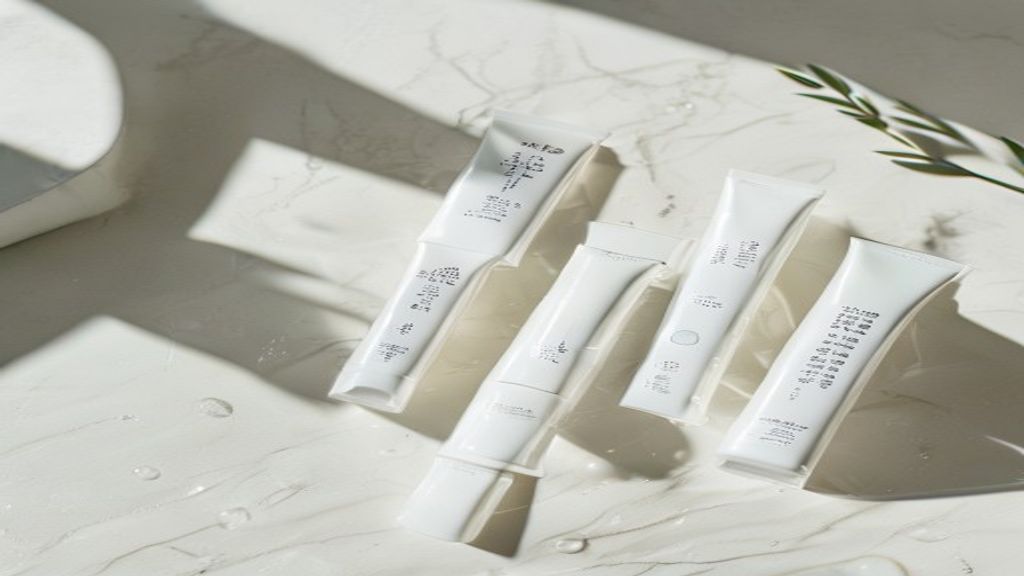
Why Korean Sunscreen Still Dominates in 2026
If you've ever stood in a Korean pharmacy — a yakguk — surrounded by floor-to-ceiling shelves of sleek SPF tubes, you'll understand why the rest of the world is paying attention. Korean sunscreen isn't a trend that peaked and faded. In 2026, it's stronger than ever, and for good reason.
Korea has some of the most rigorous cosmetic safety regulations on the planet. The Ministry of Food and Drug Safety (MFDS) classifies sunscreens as quasi-drugs, meaning they face pharmaceutical-grade testing before hitting shelves. That's a fundamentally different standard than what most Western brands operate under — and it shows in the results.
Combine that with a beauty culture that has prioritized sun protection for decades, a deep-rooted philosophy around skin preservation, and relentless innovation from labs in Seoul, and you get products that are simply ahead of the curve.
---
A Brief Cultural History of Sun Protection in Korea
Skin as a Reflection of Health and Harmony
The Korean obsession with sunscreen doesn't come from vanity alone. Historically, light, even-toned skin in Korea was associated with health, social status, and inner harmony — concepts woven into Confucian ideals of balance and self-care. Aristocratic women of the Joseon Dynasty (1392–1897) used powdered rice and ground mung beans as natural skin protectants, and shielded themselves from the sun with elaborate parasols and layered hanbok fabric.
Fast-forward to the late 20th century, and Korea's beauty industry industrialized these instincts. By the 1990s and early 2000s, Korean dermatology clinics were already prescribing SPF as part of post-procedure routines — a practice that Western clinics only widely adopted much later.
The Global Export of Korean SPF Culture
When the Korean Wave (Hallyu) swept through global pop culture via K-dramas and K-pop in the 2010s, Western audiences noticed something: Korean celebrities had extraordinary skin. Beauty editors started tracing it back to the basics — double cleansing, layered hydration, and disciplined daily SPF use. By 2025, Korean sunscreens had become the fastest-growing import category in the global SPF market.
In 2026, that momentum hasn't slowed. It's accelerated.
---
What Makes Korean Sunscreens Different From Western Ones
Dual-Filter Technology
Most Korean sunscreens use a sophisticated blend of both chemical (organic) and physical (mineral) UV filters — often featuring newer-generation filters like Tinosorb S, Tinosorb M, Uvinul A Plus, and Bemotrizinol that are not yet FDA-approved in the United States. This gives Korean formulas broader UVA/UVB coverage with less of the white cast and greasiness that plagued earlier mineral-only sunscreens.
PA++++ Rating System
While Western sunscreens use SPF (which only measures UVB protection), Korean products also display a PA rating — Protection Grade of UVA rays. In 2026, the gold standard is PA++++, indicating the highest level of UVA protection. This dual-rating system gives consumers far more information than a single SPF number ever could.
Elegant Textures and Cosmetic Elegance
Korean formulators obsess over feel. The rise of lightweight "essence sunscreens," serum-SPF hybrids, and hydrating mists has transformed daily SPF use from a chore into a pleasure. These textures were designed for the Korean skincare philosophy of layering — they need to sit comfortably under moisturizer, makeup, and throughout a humid Seoul summer.
---
Best Korean Sunscreens of 2026: Category-by-Category Reviews
Best for Oily and Combination Skin
If you've struggled with that dreaded sunscreen shine by mid-morning, Korean formulations for oily skin will feel like a revelation. The best picks in this category feature:
- Silica-based oil-absorption technology that controls sebum without over-drying
- Lightweight, water-gel textures that sink in within seconds
- Matte or satin finishes that double as primer
- SPF 50+ / PA++++ protection
Best for Dry and Sensitive Skin
For those with dry or reactive skin, Korean sunscreens have pioneered what's known as moisture sandwich formulation — sandwiching SPF filters between layers of humectants like hyaluronic acid, beta-glucan, and panthenol.
The best 2026 options for sensitive skin:
- Fragrance-free and alcohol-free formulations
- Centella asiatica (cica) extracts for calming
- Mineral-forward filters for those reactive to chemical UV agents
- Creamy, cushion-like textures that double as a moisturizer step
Best Tinted Korean Sunscreens
Tinted SPF has exploded in popularity globally, and Korean brands have refined it into an art form. In 2026, the best Korean tinted sunscreens offer:
- Buildable coverage from sheer to light-medium
- Iron oxide pigments that protect against visible light (HEV/blue light) — a documented cause of hyperpigmentation
- Color-correcting undertones (peach, lavender, or neutral) matched to various skin tones
- Broad-spectrum SPF 50+ / PA++++
Best Korean Sunscreen for Body and Outdoor Use
Not all Korean SPF is designed for delicate facial skin. For outdoor use, beach days, or active lifestyles, Korean brands have developed water-resistant, sweat-proof formulas that still manage to feel better than the thick, white Western sport sunscreens many of us grew up resenting.
Key features to look for:
- Water resistance up to 80 minutes
- Reef-safe mineral filters (zinc oxide, titanium dioxide) for environmentally conscious use
- Spray or stick formats for easy reapplication
- SPF 50+ / PA++++
How to Read a Korean Sunscreen Label
For first-time buyers, Korean packaging can feel overwhelming — especially if the product is partially in Hangul. Here's a quick decoder:
| Term | Meaning | |---|---| | 자외선차단지수 | Sun Protection Factor (SPF) | | PA++++ | Highest UVA protection rating | | 워터프루프 | Waterproof | | 무향 | Fragrance-free | | 민감성 피부용 | For sensitive skin | | 비건 | Vegan formula |
Most Korean sunscreens sold internationally now include English labels or at minimum bilingual packaging, but knowing these terms helps when shopping directly from Korean retailers or platforms like Olive Young's global store.
---
Ingredients to Look For (and Avoid) in 2026
Seek Out These K-Beauty Power Ingredients
- Tinosorb S & M — next-gen broad-spectrum filters, photostable and skin-friendly
- Uvinul A Plus — superior UVA protection, gentle on skin
- Centella asiatica — calming, anti-inflammatory, ideal for post-sun repair
- Niacinamide — brightens, reduces dark spots, supports barrier
- Beta-glucan — deep hydration, wound-healing properties
- Adenosine — anti-aging, wrinkle reduction
Ingredients Some Consumers Choose to Avoid
- Oxybenzone — potential hormone disruption (rare in Korean formulas)
- Octocrylene — can degrade into benzophenone over time
- Artificial fragrance — common irritant for sensitive skin types
- High alcohol content — can strip skin barrier with daily use
---
Sunscreen Application Tips from Korean Skincare Culture
Even the best sunscreen fails if applied incorrectly. Korean skincare culture has developed a set of practical habits around SPF that are worth adopting:
The Two-Finger Rule
Korean dermatologists popularized the "two-finger rule" for facial sunscreen — dispense a strip of product along the length of your index and middle fingers. This roughly equates to the 2mg/cm² density used in SPF efficacy testing, ensuring you actually get the SPF printed on the label.
Reapplication is Non-Negotiable
In Korea, it's completely normal to reapply sunscreen mid-day — at lunch, after exercise, or after heavy sweating. Cushion compact sunscreens (another Korean innovation) were specifically designed to make this convenient over makeup without disrupting your look.
Layering Order
In the Korean 10-step routine, sunscreen is always the final skincare step before makeup. It goes on after moisturizer and before any color cosmetics. Never mix it into your moisturizer — this dilutes the formula and reduces SPF efficacy.
---
Frequently Asked Questions About Korean Sunscreen
Is Korean sunscreen safe for dark skin tones?
Absolutely. The white cast problem that plagued older mineral sunscreens has been largely solved by Korean brands through the use of micronized mineral particles and hybrid filter systems. In 2026, many Korean sunscreens are explicitly formulated to be invisible across a wide range of skin tones. Look for "no white cast" (무백탁) on the label.
Can I use Korean sunscreen if I'm pregnant?
Consult your OB-GYN or dermatologist, but in general, mineral-based Korean sunscreens with zinc oxide and titanium dioxide are widely considered safe during pregnancy. Fragrance-free versions are ideal.
Are Korean sunscreens vegan and cruelty-free?
Many are, but not all. Korea ended mandatory animal testing for cosmetics in 2017. Look for products certified by Leaping Bunny or Korea's own KFDA-approved cruelty-free logos. Vegan certification (비건) is increasingly displayed on packaging.
Why are Korean sunscreens often cheaper than comparable Western brands?
Korea's beauty manufacturing ecosystem is highly efficient and vertically integrated. Many Korean brands manufacture in-country with minimal outsourcing, keeping costs lower. The highly competitive domestic market also drives prices down while keeping quality high.
---
How to Buy Korean Sunscreen in 2026: Where to Shop
You no longer need to know someone in Seoul to access the best Korean sunscreens. In 2026, your options include:
- Olive Young Global — Korea's largest health and beauty retailer ships internationally
- YesStyle — wide selection with user reviews
- Stylevana — frequent sales, authentic products
- Amazon — convenient but verify seller authenticity
- Korean grocery stores — surprisingly strong SPF sections in cities with Korean communities
- Local K-beauty specialty stores — growing presence in major Western cities
---
Final Thoughts: Sunscreen as a Form of Self-Respect
There's a concept in Korean culture called 피부 관리 (pibu gwalli) — skin management or skin care — that treats protecting your skin not as vanity but as fundamental self-maintenance, like brushing your teeth or drinking enough water. Korean sunscreen culture grew from this philosophy.
Anyone who has made the switch from a heavy, white-casting Western SPF to a lightweight Korean formula knows what it feels like to actually enjoy putting on sunscreen. That shift in experience is what's driven global adoption, and it's why the best Korean sunscreens of 2026 continue to earn devoted followings across every skin type and continent.
Sunscreen is the single most evidence-backed anti-aging skincare product in existence. Korean beauty culture figured that out decades ago and built an entire industry around making daily use effortless.
---
Interested in going deeper into Korean beauty culture, skincare philosophy, or the history behind K-beauty's global rise? Explore our full library of Korean culture and beauty content — from the science behind fermented skincare ingredients to the cultural rituals that shaped modern K-beauty as we know it today.